


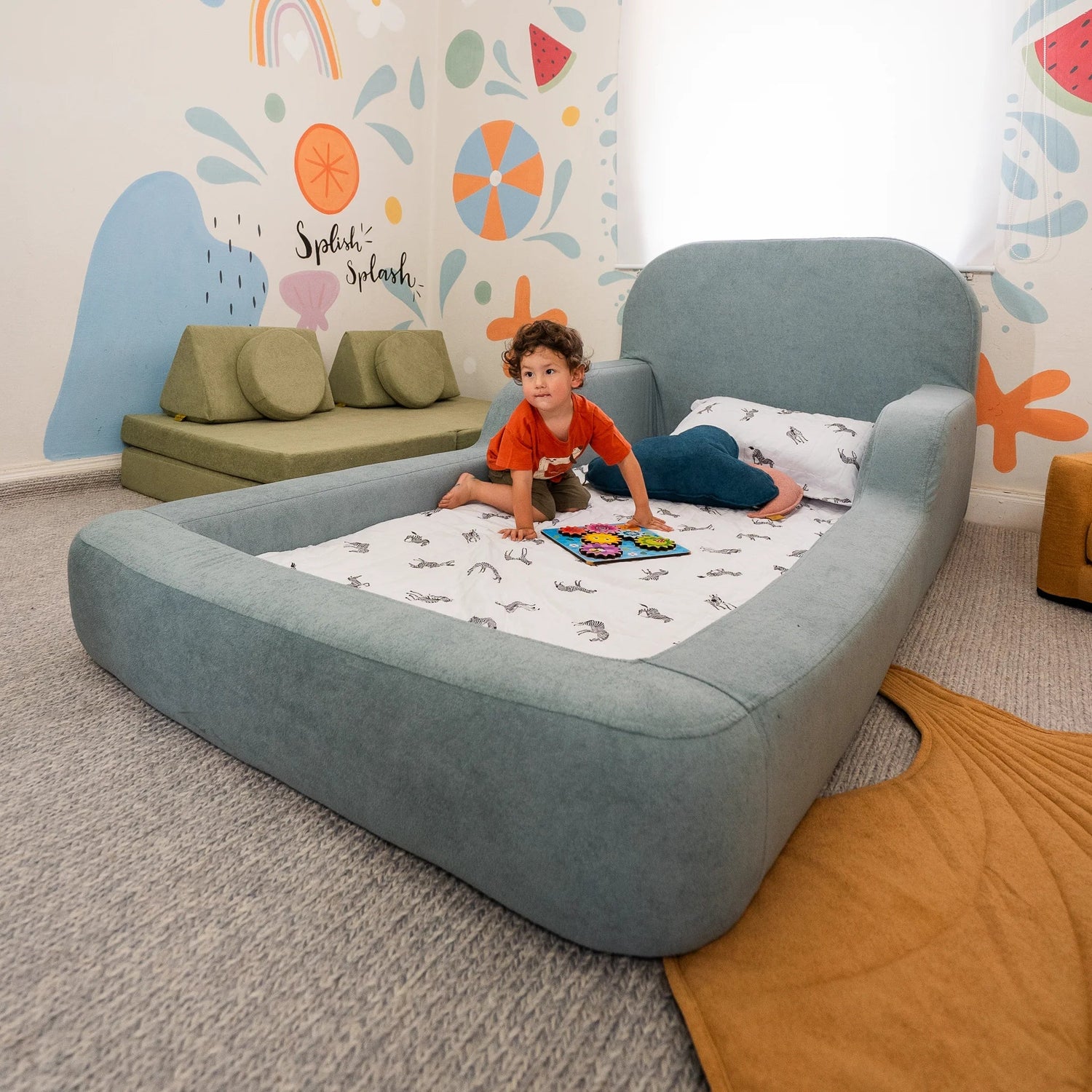
Every Montessori bed on the market follows the same formula: a wooden frame, close to the floor, usually shaped like a house. They look beautiful in photos. But if you have ever actually assembled one, slept next to one while your toddler kicks the rails at 2 AM, or tried to move one between rooms, you know the formula has real problems.
The Problems With Traditional Wood Montessori Beds
Assembly Is a Project
Most wooden Montessori beds ship flat-packed with 40 to 80 pieces, an Allen wrench, and instructions that assume you have a free Saturday afternoon. Loose bolts, misaligned slats, and missing hardware are common complaints across every major brand.
Sharp Edges and Splinters
Wood is a hard material. Corners, even when sanded and rounded, are rigid contact points. House-frame beds have vertical posts and roof beams that toddlers bump into during nighttime movement. Pine is prone to splintering along the grain, especially as the finish wears.
Entrapment and Gap Hazards
The CPSC has issued multiple recalls on children's beds due to entrapment between the mattress and the frame. Any time you place a soft mattress inside a rigid frame, you create potential gaps where legs, arms, and heads can get stuck.
Weight and Shipping
A typical wooden frame weighs 30 to 60 pounds. Shipping a heavy, oddly shaped box across the country is expensive, and the chance of damage in transit is real.
The Mattress Problem
A wooden bed frame needs a separate mattress. That is an additional $100 to $300, plus the challenge of finding the right fit. Too small and you get gaps. Too thick and it sits too high. The frame and the mattress are two separate purchases that need to work together perfectly.
The GrowTech Foam Solution
Our approach was to eliminate the frame entirely. The Little Duck Bed is made of high-density foam (33D) using GrowTech technology. The bed and the mattress are the same thing: a single, integrated sleep surface with sculpted edges, zero hard components, and no assembly required.
What Is 33D Foam?
The "33D" refers to density: 33 kilograms per cubic meter. For context, a standard mattress-in-a-box uses 24 to 28D foam. Higher density means better support, longer lifespan, and more structural integrity. Our foam holds its shape for years without sagging, even with daily jumping.
Hypoallergenic and Antibacterial
The foam is naturally resistant to dust mites, mold, and bacteria. For children with allergies or asthma, this is a meaningful advantage over wood or spring mattresses.
Removable, Washable Covers
Every Little Duck Bed comes with a machine-washable zip-off cover. Accidents, spills, and general toddler chaos are part of life.
How Foam Solves Every Pain Point
Zero Assembly
The bed arrives in a box. You open the box. You place the bed on the floor. That is the entire setup process. No tools, no hardware, no instruction manual. Setup takes under 5 minutes.
No Sharp Corners, Anywhere
There is no surface on the Little Duck Bed that can hurt your child. If your toddler rolls into the bed's edge at 3 AM, they bump into soft foam.
No Entrapment Gaps
Because the bed IS the mattress, there is no frame-to-mattress gap. The sleep surface extends to every edge of the product. Nothing to get stuck in.
Lightweight Shipping
The foam bed compresses into a compact box that weighs a fraction of a wooden frame. You can carry the box upstairs with one hand.
Wood vs. Foam: Side-by-Side Comparison
| Feature | Traditional Wood Frame + Mattress | Little Duck Foam Bed |
|---|---|---|
| Assembly time | 45 to 90 minutes, tools required | Under 5 minutes, zero tools |
| Total weight | 30 to 60 lbs (frame) + 15 to 25 lbs (mattress) | Under 20 lbs total |
| Sharp edges | Corners, posts, slats, bolts | None |
| Entrapment gaps | Frame-to-mattress gaps possible | None (bed is the mattress) |
| Separate mattress needed | Yes ($100 to $300 additional) | No (integrated) |
| Cover maintenance | Spot-clean mattress, wipe frame | Machine-washable zip-off cover |
| Allergen resistance | Wood grain and fabric trap dust mites | Hypoallergenic, antibacterial foam |
| Portability | Requires disassembly to move | Pick up and relocate in seconds |
| Durability | Joints loosen, paint chips, wood cracks | 33D foam retains shape for years |
| Typical total cost | $250 to $600+ | $690 (all-in, nothing else to buy) |
Available in 5 Colors
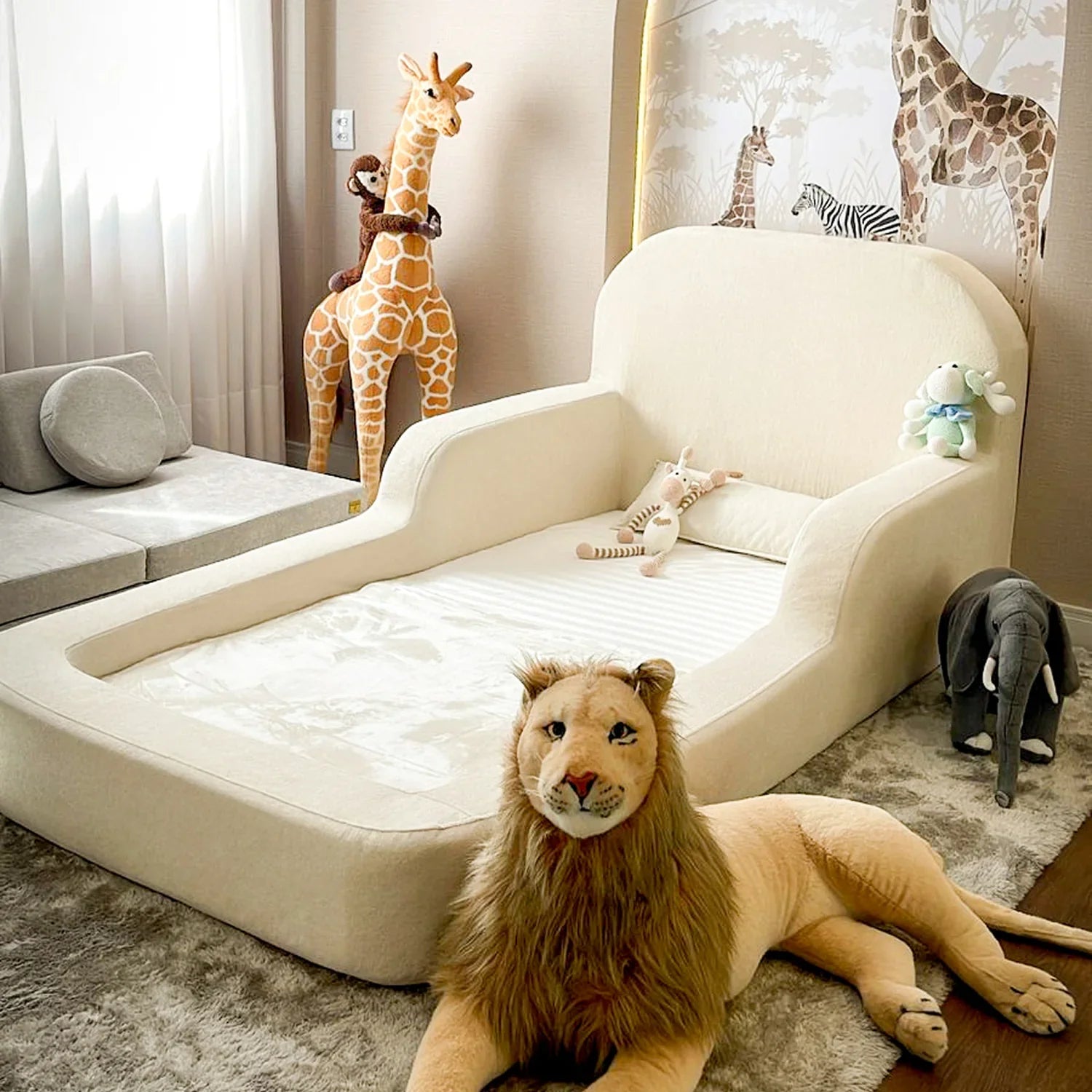
Sky Blue: coastal, calm, gender-neutral. Stone Castle Gray: Scandinavian minimal, pairs with everything. Vanilla Linen: warm neutral, boho-friendly. Fairy Blossom Pink: soft, muted, not bubblegum. Olive Green: nature-inspired, earthy, timeless.
The Decision We Made
Designing a bed without wood was not a cost-cutting measure. It was a safety-first decision. Every feature of the Little Duck Bed exists because we asked: "what would a children's bed look like if we designed it around the child's experience instead of the parent's expectation of what a bed should look like?"
Frequently Asked Questions
Is a foam bed firm enough to support a toddler's developing spine?
Yes. The 33D density foam provides firm, even support across the entire sleep surface. It is denser than most adult mattresses-in-a-box (which typically use 24 to 28D foam). Pediatric guidelines recommend a firm sleep surface for children, and high-density foam meets that standard.
How does the price compare to a wood bed plus a mattress?
A quality wooden Montessori bed frame ranges from $150 to $400, and a compatible mattress adds $100 to $300. The total is typically $250 to $600 or more. The Little Duck Bed costs $690 and includes everything: bed, mattress (integrated), and a washable cover.
Will the foam develop impressions or sag over time?
At 33D density, the foam is highly resistant to permanent impressions. Standard consumer mattresses that develop body impressions typically use 20 to 26D foam. Our foam is rated for years of daily use.
Can I use the Little Duck Bed as a play surface during the day?
Absolutely. Many families use the bed as a reading spot, a play area, and even a mini couch during daytime hours. Because there are no frame components to damage, everyday play does not affect the bed's structure.
See the difference for yourself
No wood. No metal. No assembly. Just the safest Montessori bed, reimagined in foam.
Shop Montessori Beds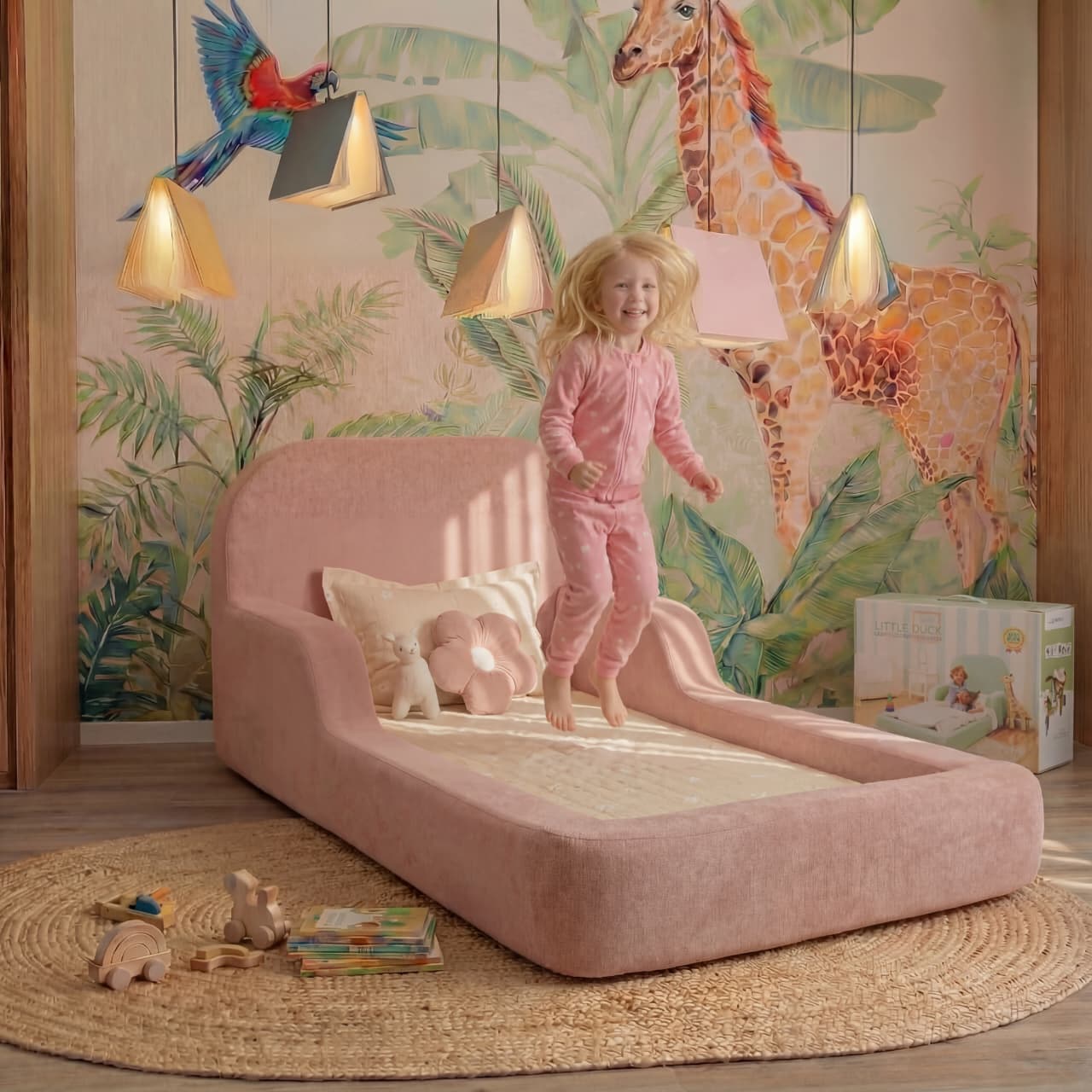

Leave comment
This site is protected by hCaptcha and the hCaptcha Privacy Policy and Terms of Service apply.