


The crib-to-bed transition is one of those parenting milestones that generates a lot of anxiety (and a lot of conflicting advice). Some families make the switch at 12 months. Others wait until age 3. Both can be perfectly fine, depending on your child.
Developmental Signs That Your Child Is Ready
- Pulling to stand consistently: your child can get themselves upright and navigate getting in and out of a low surface.
- Attempting to climb out of the crib: this is both a readiness sign and a safety signal.
- Showing interest in "big kid" things: wanting to do what older siblings do, expressing interest in their own space.
- Able to follow simple directions: understanding "stay in your bed" or "it is time to sleep."
- Consistent sleep patterns: if your child sleeps through the night most nights in the crib, the transition will be smoother.
Age-by-Age Breakdown
6 to 12 Months: Too Early (With One Exception)
The American Academy of Pediatrics recommends a firm, flat sleep surface with no soft bedding for infants under 12 months. A standard floor bed with pillows and blankets does not meet this standard. We recommend waiting until at least 12 months for most families.
12 to 18 Months: The Earliest Safe Window
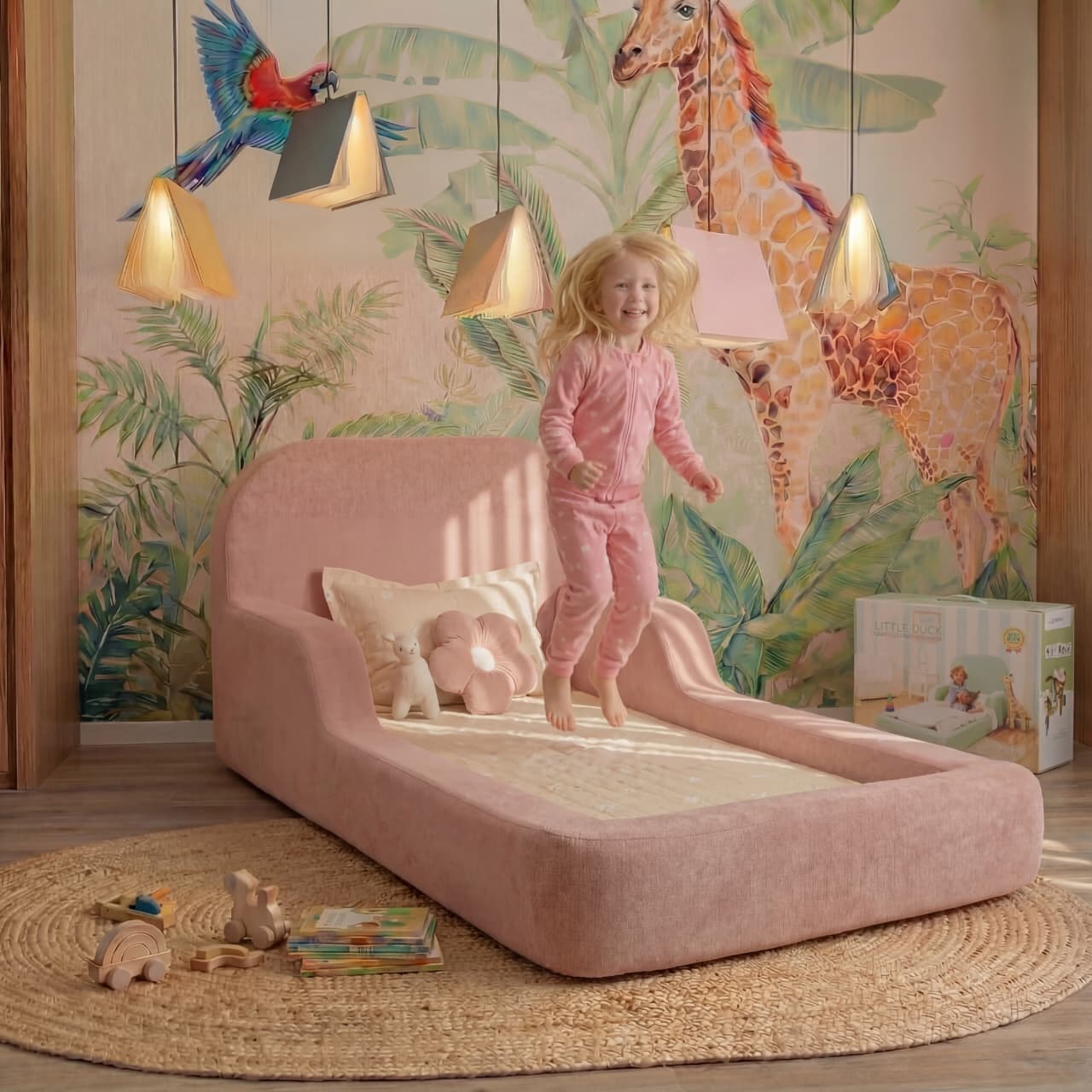
For early walkers who are confidently pulling to stand and cruising, 12 to 18 months can work well. You eliminate the climbing-out-of-the-crib risk before it starts. A foam floor bed like the Little Duck Bed is ideal here because there are zero sharp edges and the surface is just inches off the ground.
Room safety at this age is non-negotiable: furniture anchored to walls, outlet covers, blind cords eliminated, no small objects accessible, and a baby gate on the door.
18 to 24 Months: The Sweet Spot
This is the most popular window for Montessori families. By 18 months, most toddlers are walking confidently, beginning to understand routines, and showing the independence drive that makes a floor bed feel natural.
Room Safety Checklist
All furniture secured to walls with anti-tip straps. No cords, strings, or ribbons accessible. Outlet covers on every outlet. Window locks or guards installed. No heavy objects on shelves above the bed. Nightlight plugged in (not a lamp they can reach). Door handle cover or baby gate if the child wanders at night.
2 to 3 Years: The Most Common Transition
If you have not transitioned by age 2, you are in the majority. Many pediatricians recommend keeping the crib as long as your child is happy and not climbing out. A foam floor bed is especially reassuring for this age group because many 2-year-olds are used to the enclosed feeling of a crib. A floor bed feels cozy, safe, and close to the ground, reducing nighttime anxiety.
3+ Years: Still in a Crib? That Is Okay
Some children are content in a crib well past age 3, and that is perfectly fine. When you do transition, the process is usually the smoothest at this age because your child fully understands what is happening.
How a Foam Floor Bed Reduces Transition Anxiety
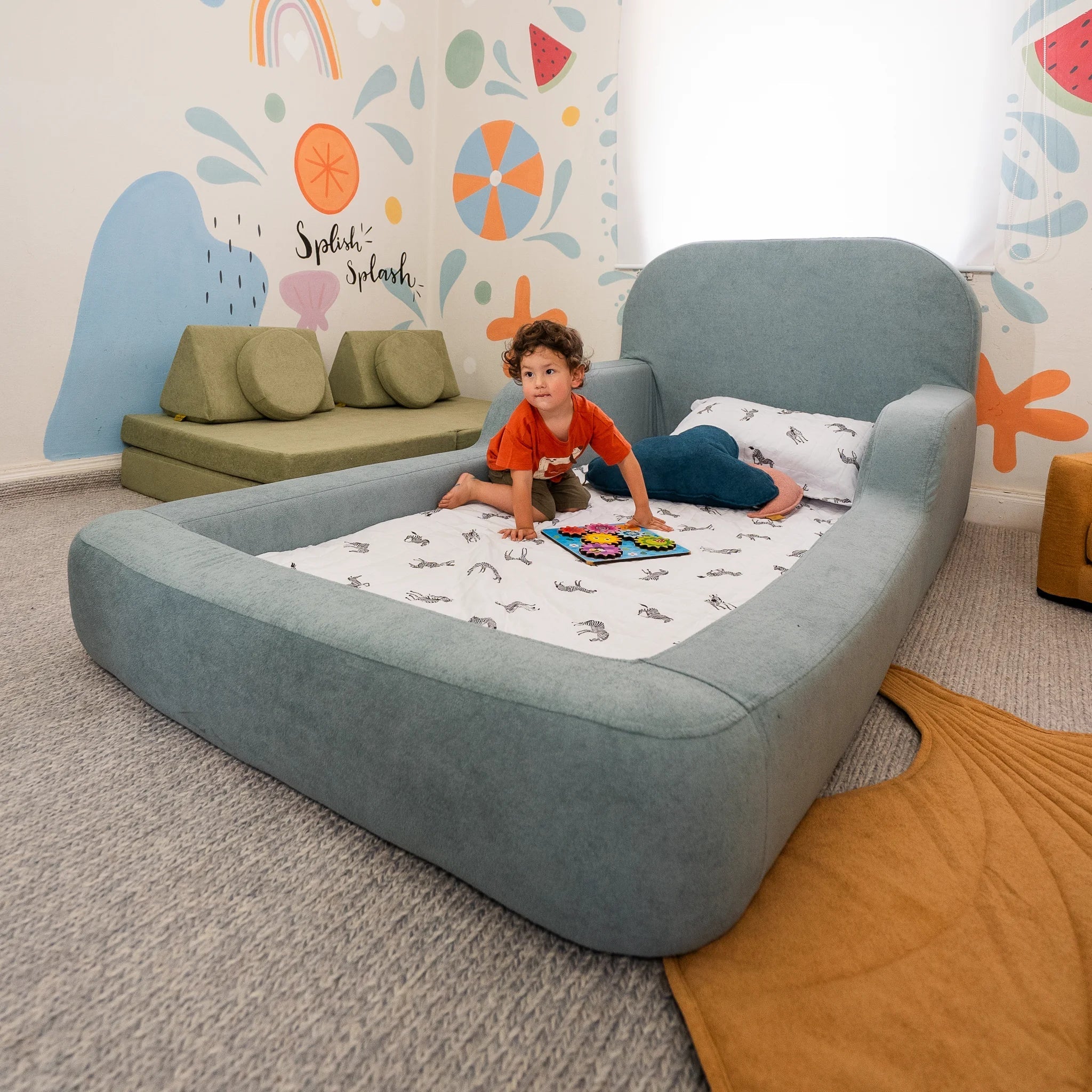
- No height: the sleep surface sits just inches off the floor. Rolling off is a non-event.
- No hard edges: a 100% foam bed has no wooden or metal rails, corners, or joints.
- The bed IS the mattress: no gap between a mattress and a frame where little legs can get stuck.
- Familiar ground-level perspective: toddlers who have been crawling and playing on the floor feel comfortable at floor level.
Signs the Transition Is Working
- Your child gets into bed independently at bedtime.
- Night wakings return to baseline within one to two weeks.
- Your child shows pride in their "big kid bed."
- Morning wake-ups are calm.
Signs to Adjust Your Approach
- Getting out of bed repeatedly for more than 2 to 3 weeks (try a more boring room).
- Sleep quality has significantly worsened (consider whether the timing was right).
- Your child expresses fear (spend more daytime playing on the bed before using it for sleep).
Remember: a rough first week is completely normal. Give the transition at least two full weeks before deciding it is not working.
Frequently Asked Questions
Is a floor bed safe for a 1-year-old?
A floor bed can be appropriate for children 12 months and older, provided the room is fully childproofed and the sleep surface is firm and flat. The AAP does not recommend floor beds with soft bedding for infants under 12 months.
What if my toddler keeps getting out of bed?
This is normal during the first one to two weeks. Keep the room safe and boring at night, maintain a consistent bedtime routine, and calmly return your child to bed. Most toddlers settle within 7 to 14 days.
Do I need bed rails with a floor bed?
Traditional bed rails are not necessary with floor beds. The sleep surface is already at ground level. A foam floor bed with built-in raised edges provides a gentle barrier without entrapment risks.
Should I transition to a floor bed or a toddler bed with rails?
A floor bed encourages more independence. For Montessori-aligned families, the floor bed is the clear choice. The most important factor is safety: a foam floor bed eliminates sharp edges, entrapment gaps, and fall height.
Make the transition easy
No hard edges. No assembly. No separate mattress. Just a safe, soft bed your toddler will love.
Shop Montessori Beds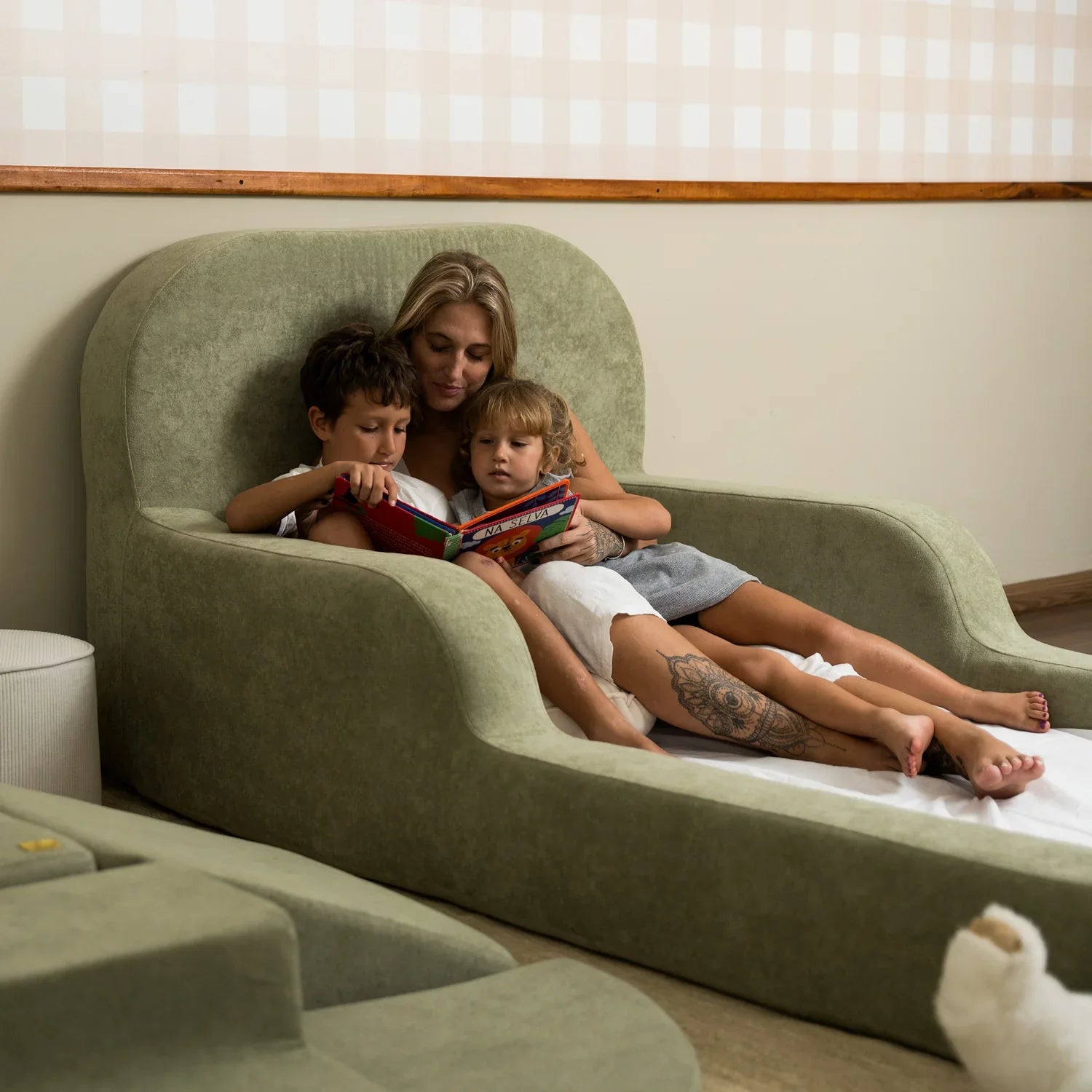

Leave comment
This site is protected by hCaptcha and the hCaptcha Privacy Policy and Terms of Service apply.