


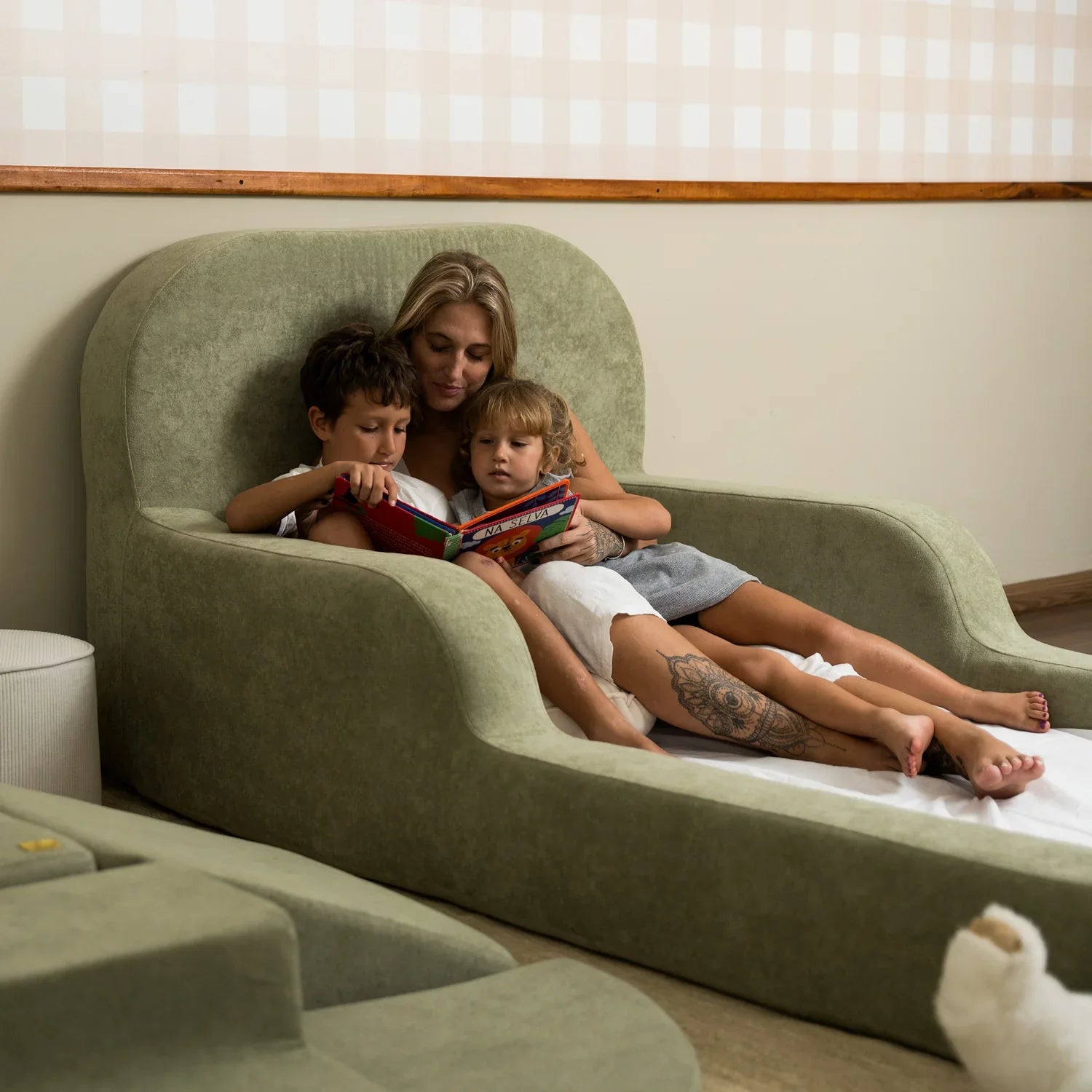
A Montessori bedroom is more than an aesthetic choice. It is a carefully designed environment where your child learns to move freely, make decisions, and develop confidence from the very first steps. The good news: you do not need a massive budget or a Pinterest-perfect home to make it work.
The 4 Principles Behind Every Great Montessori Room
1. Simplicity
Less is more. A cluttered room overwhelms a developing brain. Rotate toys every two weeks instead of displaying everything at once. Keep surfaces clean and open floor space generous.
2. Accessibility
Everything your child uses regularly should be within their reach: books, clothes, toys, and (most importantly) their bed. A floor-level bed lets them get in and out independently, which is the single most impactful change you can make in a nursery.
3. Beauty
Children respond to beauty just like adults do. Real plants, framed art at their eye level, natural textures, and a cohesive color palette all matter. You are not decorating for Instagram; you are creating an environment that invites calm exploration.
4. Order
Every item has a home. Low shelves with baskets, hooks at toddler height, and clearly defined zones help your child learn to clean up and find what they need without asking for help.
Zone-by-Zone Montessori Room Guide
Sleep Zone (The Anchor)
The floor bed is the centerpiece. Place it against a wall (ideally in a corner for younger toddlers) so your child feels secure but can still get up independently. A foam floor bed like the Little Duck Bed in Olive Green works perfectly here: no frame to bump into, no height to fall from, and soft enough that rolling off is a non-event.
Activity Zone
This is where play and learning happen. A low shelf (two or three tiers) with five to eight activities, rotated regularly. A small table and chair set sized for your child. Floor space for building, drawing, and imaginative play.
Reading Nook
Front-facing bookshelves (so your child can see covers, not just spines) and a cozy spot to sit. Position it in a quiet corner away from the activity zone.
Dressing Area
A low clothing rack or open-front dresser with two to three outfit choices per day. A small mirror at their height. A basket for dirty clothes.
Color Palette Ideas (Built Around Your Floor Bed)
Nature Explorer: Olive Green Bed
Pair with warm wood tones, cream walls, and terracotta accents. Add real or faux eucalyptus, woven baskets, and linen textiles. Completely gender-neutral.
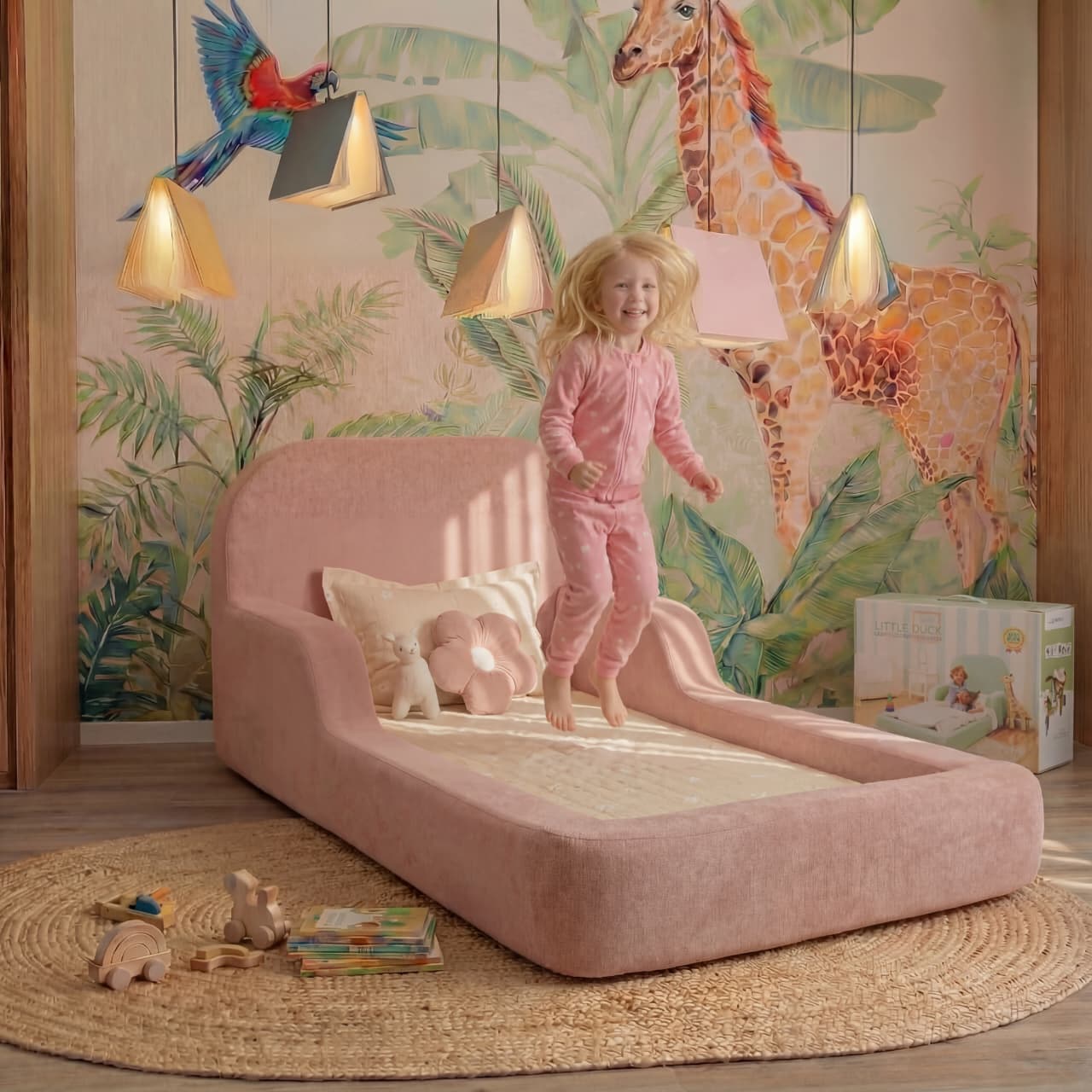
Soft Feminine: Fairy Blossom Pink Bed
Layer with dusty rose, warm white, and gold accents. Think watercolor prints, soft rugs, and dried pampas grass.
Coastal Calm: Sky Blue Bed
Combine with sandy beige, white, and driftwood textures. This palette brings airiness to even small rooms.
Scandinavian Minimal: Stone Castle Gray Bed
Match with white walls, black line-art prints, pale birch furniture, and pops of mustard or forest green.
Warm Boho: Vanilla Linen Bed
Build around warm neutrals: camel, rust, cream, and olive. The Vanilla Linen bed disappears beautifully into this palette.
Small-Space Tips That Actually Work
Combine zones: the reading nook can double as the calm-down corner. Use vertical space for storage, horizontal space for the child. Skip the dresser: a clothing rack plus two small bins takes up a third of the space. A foam floor bed saves square footage: no bulky frame, no gap between mattress and wall. Rotate, do not accumulate: five well-chosen activities beat twenty cluttered ones.
Budget-Friendly DIY Ideas
- Front-facing bookshelf: a spice rack from IKEA, mounted low, costs under $10.
- Art at child height: print free nature illustrations, frame in dollar-store frames at 24 inches.
- Invest where it counts: a high-quality foam Montessori bed that lasts from 12 months through age 6 is worth the investment.
Frequently Asked Questions
What age is best to set up a Montessori bedroom?
You can begin designing a Montessori-style nursery from birth, but the floor bed transition typically works best between 12 and 24 months.
Do I need a big room for a Montessori setup?
Not at all. A 9x10 room can comfortably fit a floor bed, one activity shelf, and a reading corner. The key is editing down to essentials.
Can siblings share a Montessori bedroom?
Yes. Place each child's floor bed in a separate corner with a visual divider. Shared activity zones encourage cooperation and social learning.
How often should I rotate toys in a Montessori room?
Every one to two weeks. Keep five to eight activities on the shelf and store the rest out of sight.
Ready to anchor your Montessori room?
Five colors. Zero assembly. The floor bed that starts the whole room.
Shop Montessori Beds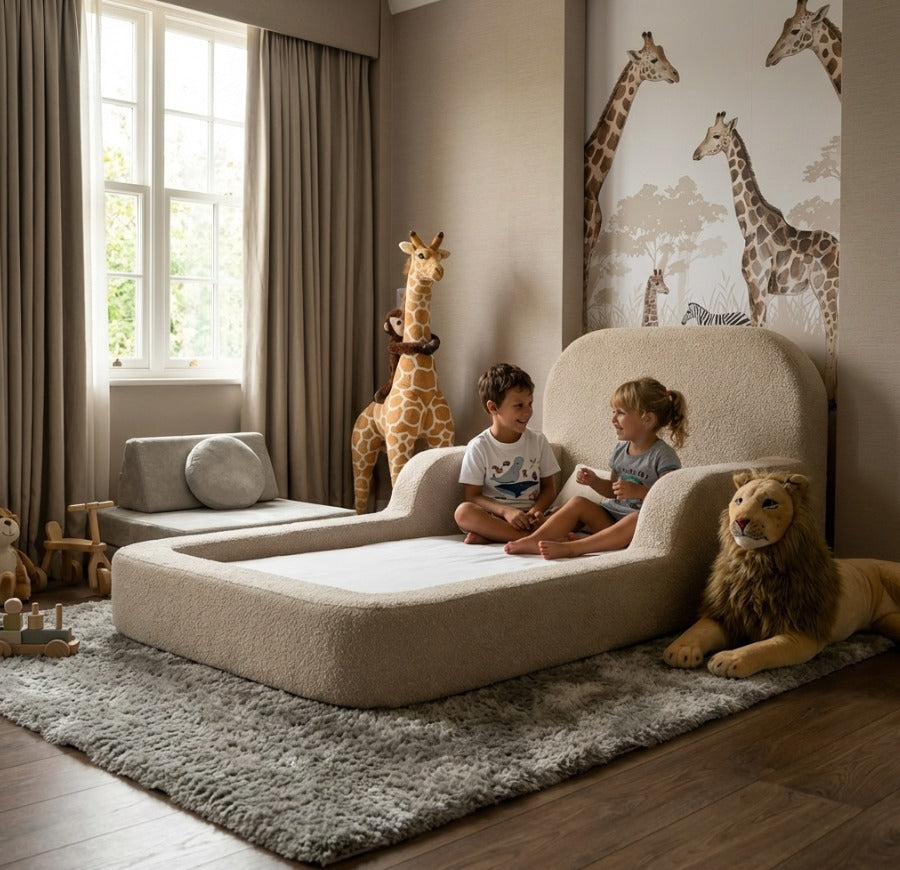

Leave comment
This site is protected by hCaptcha and the hCaptcha Privacy Policy and Terms of Service apply.