


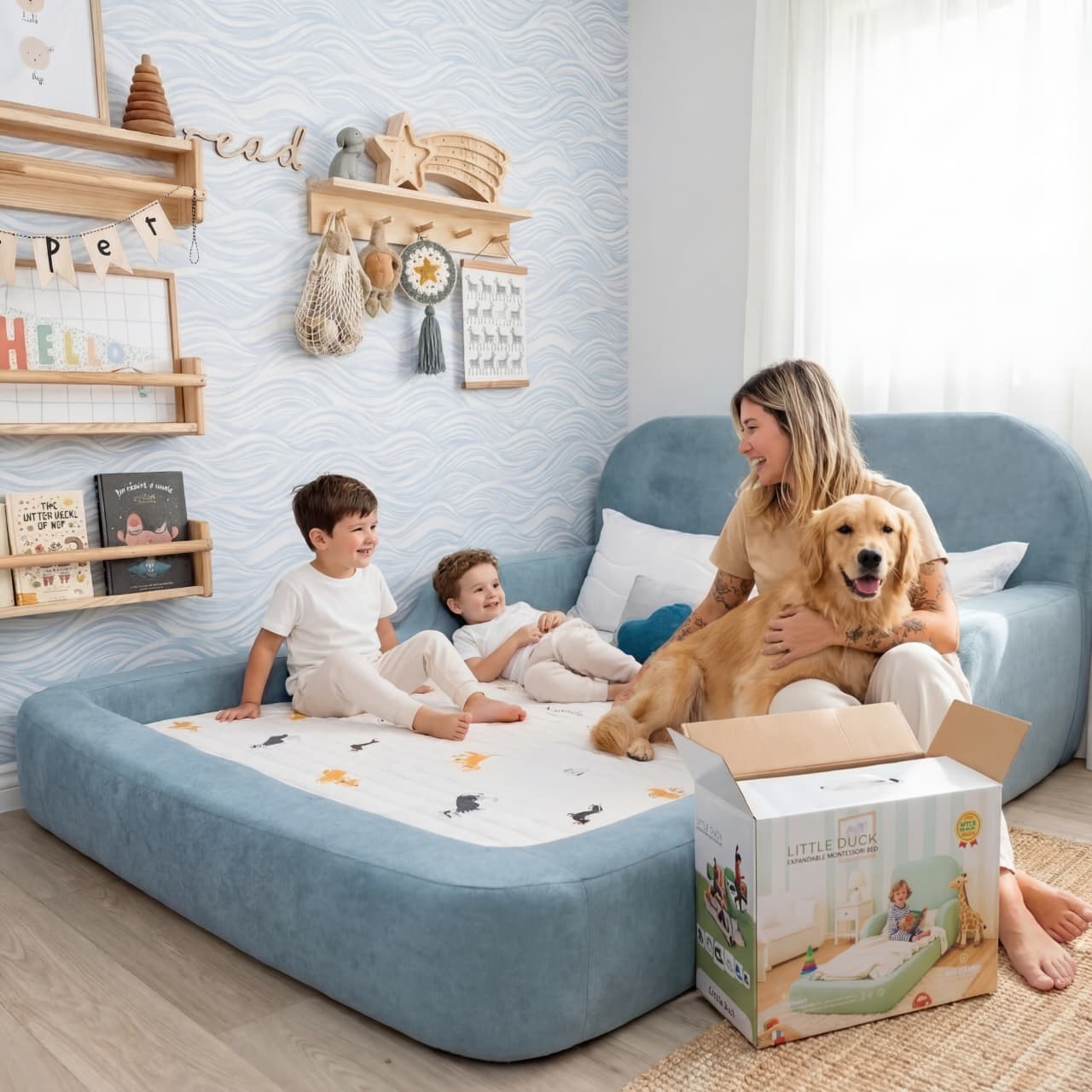
"Should I get a floor bed with rails?" is one of the most common questions parents ask when transitioning from a crib. The answer is more nuanced than most retailers will tell you, because traditional rails introduce their own safety concerns that many parents do not realize.
Why Parents Want Rails (and Why It Makes Sense)
The instinct to want rails is completely rational. Your child has slept inside an enclosed space (the crib) since birth. The idea of an open bed with no barriers feels risky. What if they roll off? What if they wander at night?
These concerns are valid. But the solution to "my child might roll off" depends heavily on how high the bed is. And that is where floor beds change the equation entirely.
The Problem With Traditional Bed Rails
Hard bed rails (wood or metal guardrails attached to a frame) have a documented safety issue: entrapment. When a child's body, head, or limbs get caught between the rail and the mattress, the results can be serious.
The CPSC Data
In August 2023, the CPSC recalled 7,450 Zipadee Kids convertible house bed frames and Montessori floor beds because the bed rails and spindles were spaced too far apart, creating entrapment hazards. This is not an isolated case. Portable bed rails (the kind you add to an existing bed) have been banned for children under 2 since 2013 due to entrapment deaths.
The fundamental problem: any time you create a gap between a rigid surface and a mattress, you create a space where a toddler can get wedged. Hard rails bolted to a frame cannot conform to the mattress shape, and that mismatch creates danger.
Why Floor Beds Reduce the Need for Rails
The primary purpose of bed rails is fall prevention. On a traditional toddler bed (which sits 12-20 inches off the ground), falling off means hitting the floor from a meaningful height. Rails make sense in that context.
A floor bed sits just inches above the ground. If your child rolls to the edge and off the bed, they roll onto the floor from a height of 2-4 inches. The "fall" is barely distinguishable from rolling over on a blanket. This is why most Montessori educators and many pediatricians consider hard rails unnecessary on true floor beds.
The Math Is Simple
- Traditional bed fall height: 12-20 inches (injury possible)
- Floor bed fall height: 2-4 inches (negligible)
- Risk reduction without rails: eliminates both fall injury AND entrapment risk
Foam Edges: The Soft Alternative
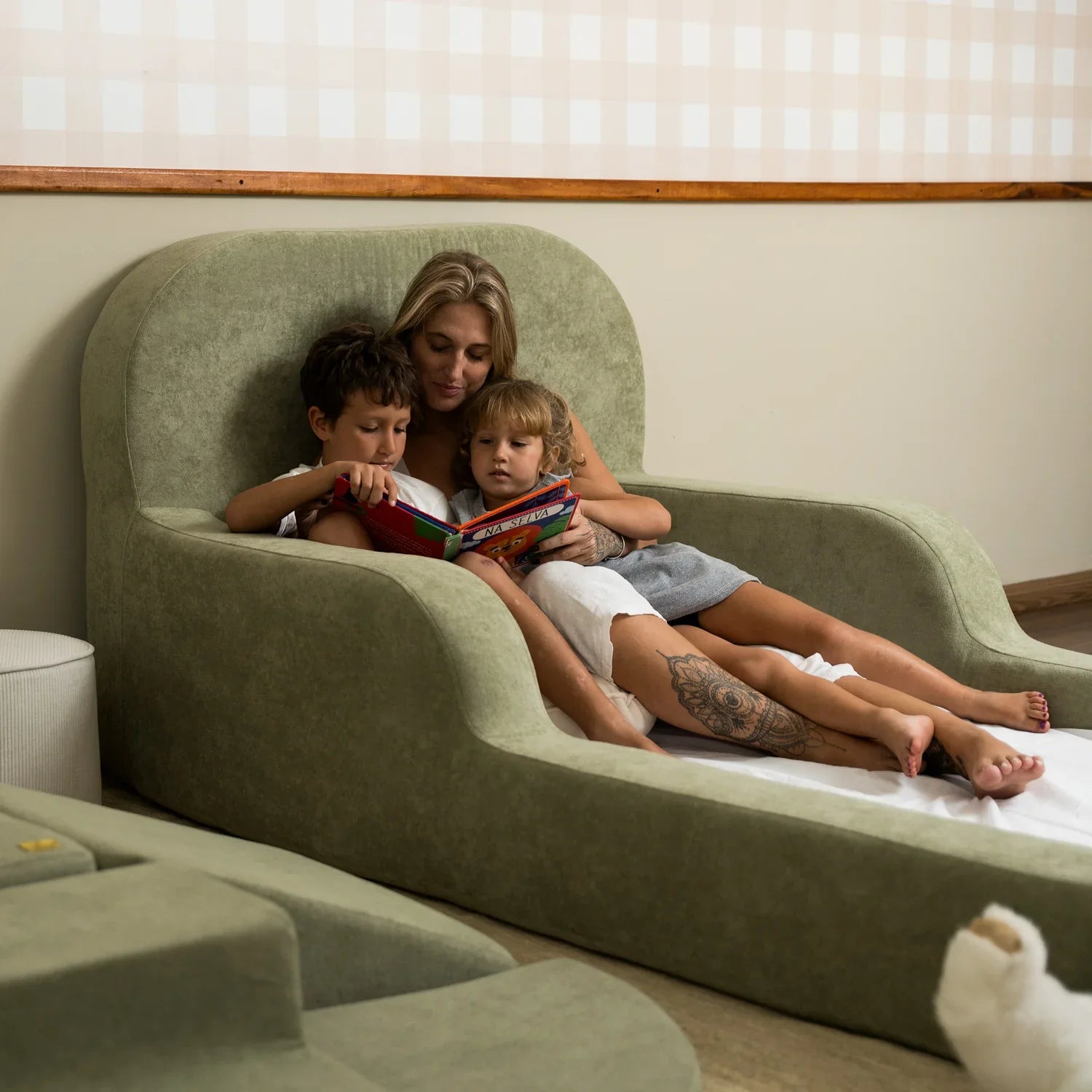
If you want some boundary without the entrapment risk of hard rails, a foam bed with slightly raised edges provides exactly that. The sculpted edges of a foam floor bed create a gentle physical cue that tells your sleeping child "you are reaching the edge." If they push past it, they encounter soft foam (not a rigid rail) and then the floor just inches below.
This approach gives you the psychological comfort of knowing there is a barrier, without the documented safety risks of hard-rail entrapment.
How Little Duck Bed Handles This
Every Little Duck Bed is made from continuous 33D foam with sculpted edges that rise slightly above the sleep surface. There is no separate rail, no gap between mattress and frame (because there is no frame), and no rigid surface to create entrapment. Your child gets a gentle boundary, you get peace of mind, and both of you avoid the documented risks of traditional bed rails. See how it works
When Rails DO Make Sense
In fairness, there are specific situations where additional boundaries help:
- Children with motor disabilities who cannot control rolling movements
- Beds raised above floor level (loft beds, bunk beds, raised platforms)
- Very restless sleepers over age 5 on standard-height twin beds
In these cases, ensure rails meet current CPSC standards, leave zero gaps, and are tested for the child's specific weight and size.
Frequently Asked Questions
Will my toddler roll off a floor bed without rails?
Probably yes, occasionally, especially in the first week or two. This is normal and harmless on a floor bed. The sleep surface is just 2-4 inches off the ground. Most children naturally learn where the edges are within a few nights and stop rolling off. A soft rug beside the bed provides extra cushion during the adjustment period.
At what age can a child sleep without bed rails?
On a floor bed, children of any age (12 months and up) can sleep safely without rails because the fall distance is negligible. On raised beds, the AAP suggests rails may be helpful until age 5 for some children. The need depends on the bed height, not the child's age alone.
Are foam bed edges as effective as hard rails?
They serve a different purpose. Hard rails physically prevent a child from leaving the bed (but create entrapment risk). Foam edges provide a tactile cue that signals the boundary without trapping the child. For floor beds where the fall risk is already minimal, foam edges are the safer choice because they eliminate entrapment entirely.
What did the 2023 CPSC recall involve?
The CPSC recalled 7,450 Zipadee Kids convertible house bed frames and Montessori floor beds because the spacing between bed rails and spindles exceeded safe limits, creating an entrapment hazard for young children. This highlights the structural risk inherent in any bed with rigid rails and gaps.
Safe Sleep Without the Rails Risk
Foam edges, ground level, zero entrapment gaps. The safest Montessori bed does not need rails.
Shop Montessori Beds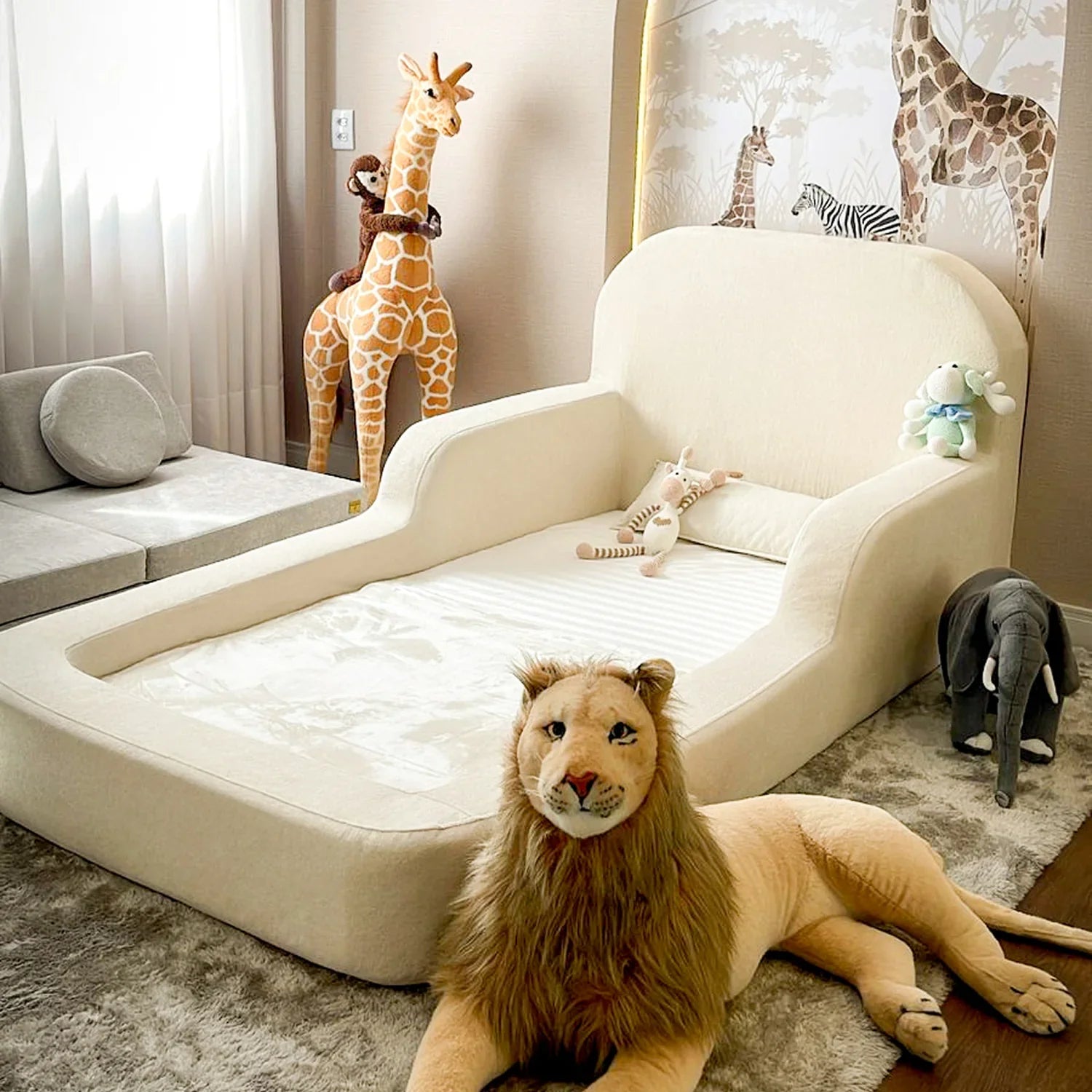

Leave comment
This site is protected by hCaptcha and the hCaptcha Privacy Policy and Terms of Service apply.