



At some point, every parent faces the same question: when do we ditch the crib? And what comes next? For many families, the answer is a Montessori floor bed. This guide breaks down the real differences, walks you through the signs your child is ready, and gives you a clear age-by-age roadmap for a smooth transition.
Crib vs. Floor Bed: A Side-by-Side Comparison
| Feature | Crib | Floor Bed |
|---|---|---|
| Age range | 0–2 years (AAP recommends transition by 35") | 12 months to 6+ years |
| Independence | Child cannot get in/out alone | Child moves freely |
| Fall risk | High if child climbs out (26"+ drop) | Near zero (floor level) |
| Sleep containment | Contained by rails | Open, baby-proofed room needed |
| Longevity | Outgrown by 2–3 years | Usable through preschool and beyond |
| Setup | Tools required, 30–60 min | Varies: wood (1–2 hrs) vs. foam (minutes) |
| Room design | Crib-centered, adult-controlled | Child-centered, accessible |
| Nighttime access | Parent lifts child in/out | Child self-regulates (with guidance) |
Neither option is universally "better." A crib is the right choice for the first year of life (the AAP is clear on this). The question is what happens after that first year, and whether your family values containment or independence as the next step.
Signs Your Child Is Ready for a Floor Bed
There's no single magic moment. But most children show several of these signals when they're ready to move on from the crib:
- Climbing attempts: the number-one safety signal. Once your child tries to climb out of the crib, the fall risk outweighs the containment benefit.
- Height threshold: the AAP recommends transitioning when your child reaches 35 inches tall, as crib rails become less effective.
- Interest in independence: wanting to do things "by myself," resisting being placed in the crib, or showing frustration at bedtime.
- Consistent sleep patterns: if your child generally sleeps through the night and understands bedtime routines, they'll adapt to a floor bed more easily.
- New sibling on the way: a practical (and very common) reason to transition, ideally completed well before the baby arrives.
Age-by-Age Transition Guide
12 Months: The Early Window
This is the earliest recommended age, based on AAP safe sleep guidelines. At 12 months, most babies are pulling to stand and may be taking first steps. A floor bed at this stage works best for families who are already practicing Montessori principles and have a fully baby-proofed room. Expect some adjustment: your toddler may initially explore the room rather than sleep, and that's normal.
Tip: keep the room minimal. Fewer distractions mean faster adaptation.
18 Months: The Sweet Spot
By 18 months, most toddlers understand basic routines ("it's bedtime, we read a book, we lie down"). They're mobile enough to use the bed confidently and verbal enough to communicate needs. This is the most popular transition age for Montessori families, and the one most sleep consultants recommend as ideal.
Tip: create a consistent bedtime routine that ends with your child choosing to get into bed. The act of choosing builds ownership over the process.
2 Years: The Natural Break
If your child is still happily sleeping in a crib at 2, there's no rush. But this is the age when most crib climbers make their move, and the transition becomes safety-driven rather than philosophy-driven. Two-year-olds are verbal, opinionated, and ready for more autonomy. A floor bed channels that energy productively.
Tip: involve your child in the process. Let them pick their bed color or help set up their new sleep space. Buy-in matters at this age.
3 Years and Beyond
By 3, most children have outgrown their crib regardless of parenting philosophy. If you're transitioning at this age, you have the advantage of a child who fully understands instructions and can participate in setting expectations. The adjustment period is typically shorter.
Tip: a floor bed is still a great choice at this age (not just a "toddler thing"). Many children use them happily through kindergarten and beyond.
Why Foam Beds Make the Transition Easier
One of the biggest anxieties parents have about floor beds is the adjustment period: what if they roll off? What if they bump into the frame? What if they don't stay in bed?
Foam floor beds address the first two concerns directly. With no hard frame, there are no edges to bump into. If your child rolls to the side, they meet soft foam, not wood.
Why Families Choose Little Duck Bed
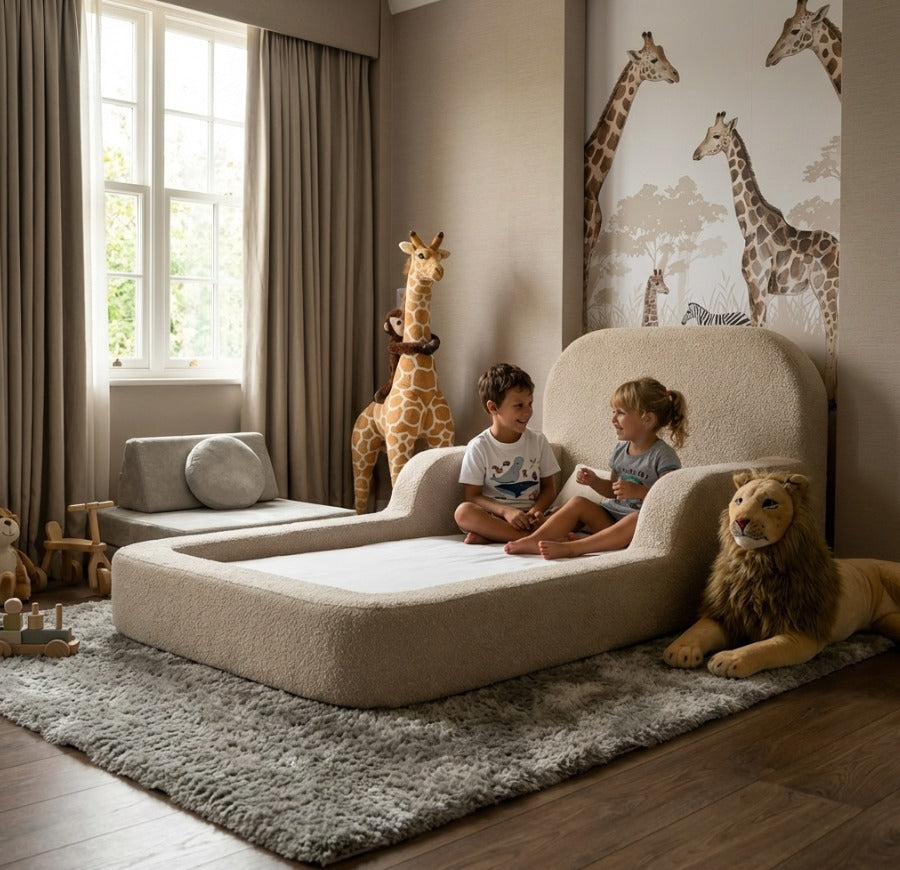
The Little Duck Bed is made entirely of high-density foam (33D) with zero hard components, so the physical transition is as gentle as possible. Setup takes minutes (no tools, no hardware). Removable, machine-washable covers handle the inevitable toddler messes. CertiPUR-US certified foam means no harmful chemicals.
Five colors that actually look good in a nursery: Sky Blue, Stone Castle Gray, Vanilla Linen, Fairy Blossom Pink, and Olive Green.
Tips for a Smooth Transition
- Baby-proof the room first. A floor bed means your child has access to the room at night. Secure furniture to walls, cover outlets, and remove anything you wouldn't want a toddler exploring unsupervised.
- Start with naps. Let your child experience the floor bed during daytime naps before committing to full nights. Lower stakes, easier adjustment.
- Keep the routine identical. Same books, same songs, same sequence. The bed is new, but everything else should feel familiar.
- Be patient with the novelty phase. Your child will probably get out of bed a few (or many) times in the first week. Calmly and quietly guide them back. This is normal and temporary.
- Don't go back and forth. Once you commit to the floor bed, stick with it. Switching between crib and floor bed creates confusion.
- Celebrate the milestone. Make it a positive experience. "You have your own big-kid bed!" goes further than you'd think.
Frequently Asked Questions
When should I switch from a crib to a floor bed?
The AAP recommends transitioning when your child reaches 35 inches tall or begins climbing out of the crib, whichever comes first. For Montessori families, 12–18 months is the earliest appropriate window, with 18–24 months being the most common transition age. If your child is sleeping well in a crib and not climbing, there's no urgent need to rush.
Will my toddler actually sleep on a floor bed, or just play?
Expect an adjustment period of 1–3 weeks. During this time, your toddler may get out of bed to explore. This is completely normal. A consistent bedtime routine, a baby-proofed room with minimal distractions, and calm redirection are the keys to success. Most families report that their child sleeps just as well (or better) on a floor bed within a few weeks.
Is a floor bed safe for a 1-year-old?
Yes, as long as the room is thoroughly baby-proofed and you follow AAP safe sleep guidelines. At 12 months, safe sleep guidelines allow for a firm, flat sleep surface. A floor bed at this age should be a firm mattress or foam bed on the floor with no loose bedding. The Little Duck Bed meets these requirements with firm, CertiPUR-US certified foam and no soft, loose components.
Do I need to buy a special mattress for a floor bed?
It depends on the type of floor bed. Wood frame floor beds typically require a standard crib or twin mattress. Foam floor beds like the Little Duck Bed are self-contained: the bed IS the foam, so there's no separate mattress to buy. This simplifies the setup and ensures the sleep surface is specifically designed for the bed's dimensions and firmness requirements.
Ready to make the switch?
No hard edges. No assembly stress. Just a safe, cozy bed your toddler can call their own.
Shop Montessori Beds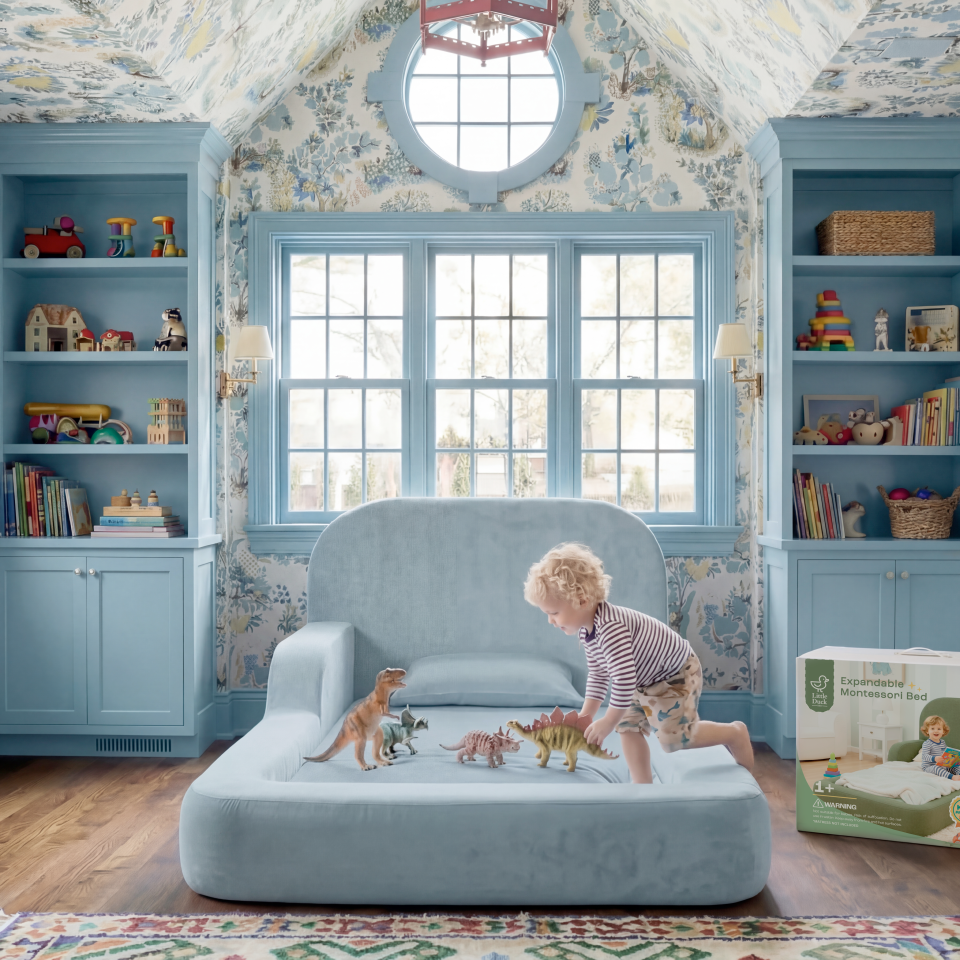

Leave comment
This site is protected by hCaptcha and the hCaptcha Privacy Policy and Terms of Service apply.