


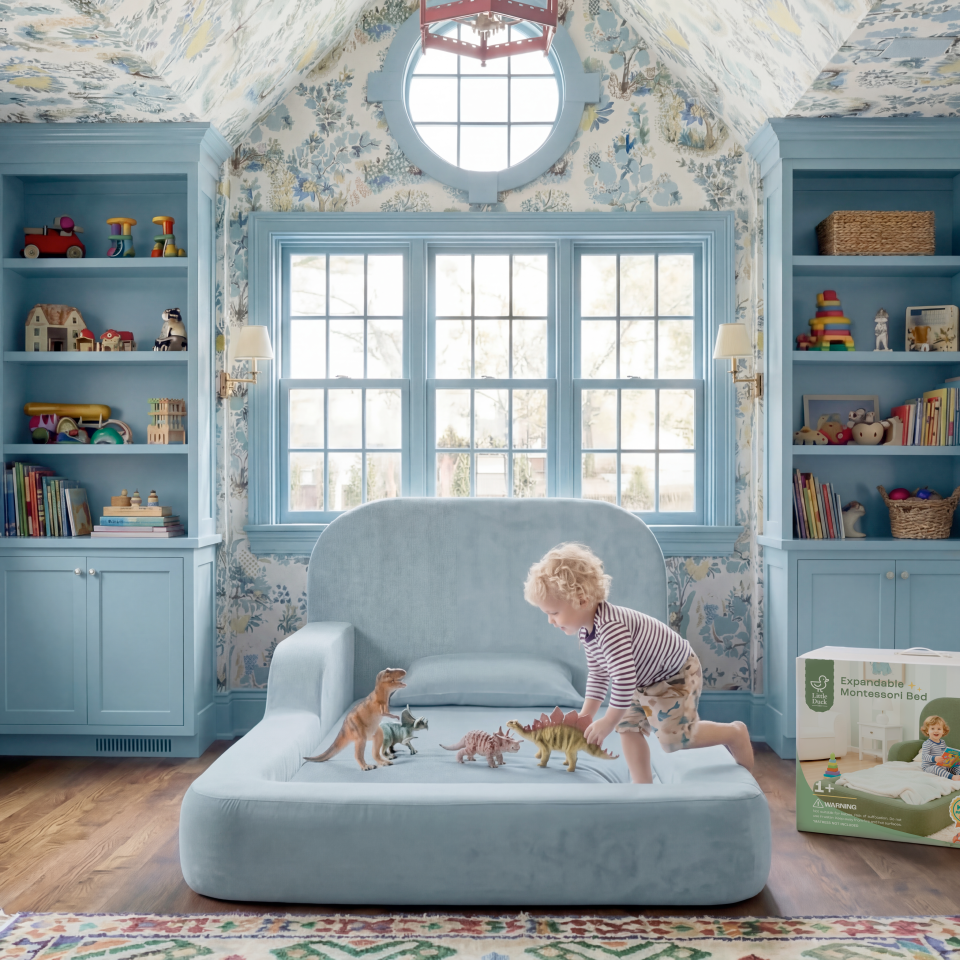
A Montessori floor bed is exactly what it sounds like: a bed placed at floor level, designed so your child can get in and out independently. No crib bars. No climbing hazards. Just a safe, accessible sleeping space that respects your toddler's growing need for autonomy.
What Is a Montessori Floor Bed?
The concept comes directly from the Montessori method, developed by Dr. Maria Montessori over a century ago. Her core insight was simple but powerful: children learn best when their environment supports independent exploration. A floor bed is one of the first ways you can apply that principle at home.
Unlike traditional cribs (which essentially confine a child until a parent decides it's time to get up), a Montessori floor bed gives toddlers the freedom to move, explore, and self-regulate. That shift in philosophy is what makes it more than just a low bed. It's a deliberate design choice for how your child interacts with their space.
The Philosophy Behind the Floor Bed
Maria Montessori observed that children thrive when they can act on their own impulses in a prepared environment. In a Montessori bedroom, everything is child-sized and accessible: low shelves, reachable books, and yes, a bed they can use without help.
The floor bed supports three pillars of Montessori philosophy:
- Independence: your child chooses when to get into bed and when to get up, building confidence in their own decisions.
- Freedom of movement: no rails or bars restricting natural movement during sleep or play.
- Respect for the child: treating even the youngest family members as capable individuals who can participate in their own routines.
This doesn't mean chaos. A Montessori bedroom is carefully prepared so that every option available to the child is a safe one. The floor bed is the centerpiece of that prepared environment.
Benefits of a Montessori Floor Bed
1. Builds Sleep Independence
When your toddler can get in and out of bed on their own, bedtime becomes a routine they participate in, not something that happens to them. Many parents report that floor bed toddlers develop stronger self-soothing skills and more positive associations with sleep.
2. Supports Motor Development
Climbing in and out of a floor bed is great practice for gross motor skills. There's no dangerous crib-climbing phase to worry about, because the bed is already at ground level.
3. Safer Than You'd Think
One of the biggest concerns parents have is, "Won't they just roll off?" At floor level, there's nowhere to fall. Compare that to a crib, where determined climbers can (and do) tumble over rails from a significant height. The AAP notes that crib-related injuries send thousands of children to the ER every year.
4. Grows With Your Child
A well-chosen floor bed works from toddlerhood through the preschool years and beyond. No need for a transitional toddler bed, then a twin bed, then another upgrade. One bed, many years.
5. Creates a Beautiful, Functional Space
Let's be honest: Montessori bedrooms look incredible. A floor bed anchors a room that's designed for a child, not just decorated for one. Low furniture, accessible toys, and a cozy bed create a space that's as photogenic as it is functional.
What Age Is Right for a Montessori Floor Bed?
The American Academy of Pediatrics (AAP) recommends that infants sleep on a firm, flat surface in a crib or bassinet for the first 12 months, following safe sleep guidelines. Most pediatricians and Montessori educators agree that 12 months is the earliest appropriate age for a floor bed transition.
Here's a general guide:
- 12–18 months: earliest transition window. Best for babies already showing signs of climbing or wanting to move independently.
- 18–24 months: the sweet spot for most families. Toddlers understand basic routines and can follow simple bedtime cues.
- 2–3 years: a natural transition point, especially if your child is outgrowing their crib or you're expecting a new sibling.
- 3–6 years: still a great age for a floor bed. Many Montessori families use them well into kindergarten.
Every child is different. Trust your instincts and your pediatrician's guidance.
Types of Montessori Floor Beds
Wood Frame Floor Beds
The most common type you'll see online. Think of the classic "house frame" bed with a peaked roof. They look charming, but they come with trade-offs: heavy shipping, complex assembly (often 1–2 hours with tools), sharp corners and edges, and potential splinter risks as the wood ages.
Foam Floor Beds
A newer approach that eliminates many of the pain points of wood beds. A foam Montessori bed has no hard edges, no metal hardware, and no splinters. It's lightweight, easy to set up, and inherently softer if your toddler rolls against the sides during sleep.
The Little Duck Bed Difference
Our beds are made entirely of high-density foam (33D), with no wood, no metal, and no sharp corners anywhere. The covers are removable and machine-washable, the foam is CertiPUR-US certified, and setup takes minutes, not hours.
Available in five colors designed for modern nurseries: Sky Blue, Stone Castle Gray, Vanilla Linen, Fairy Blossom Pink, and Olive Green.
How Little Duck Bed's Foam Approach Is Different
Most Montessori beds on the market are wood frames that sit on the floor. They solve the "low to the ground" part of the equation but introduce new concerns: hard edges, pinch points, assembly frustration, and heavyweight shipping.
The Little Duck Bed rethinks the floor bed from the material up. High-density GrowTech foam (33D) provides firm support for healthy sleep while being inherently soft on contact. No assembly tools needed. No risk of splinters or exposed hardware. And because foam compresses for shipping, it arrives at your door in a box, not on a freight truck.
Frequently Asked Questions
What is a Montessori bed, and how is it different from a regular toddler bed?
A Montessori bed sits at or near floor level so your child can get in and out independently. Unlike a regular toddler bed (which is essentially a smaller, lower version of an adult bed with side rails), a Montessori floor bed is designed around the philosophy of child-led independence. The goal is a sleep space your child can access without help, in a bedroom prepared for safe exploration.
At what age can I start using a Montessori floor bed?
Most experts recommend waiting until at least 12 months, following AAP safe sleep guidelines for the first year. The sweet spot for most families is between 18 and 24 months, when toddlers are mobile and starting to understand bedtime routines. Some families transition as late as 2–3 years, and that's perfectly fine.
Are Montessori floor beds safe for toddlers?
Yes, when age-appropriate guidelines are followed. Because the bed is at floor level, there's virtually no fall risk. The key safety considerations are using a firm mattress or foam bed, baby-proofing the room thoroughly, and waiting until your child is at least 12 months old. Foam Montessori beds like the Little Duck Bed add extra safety by eliminating hard edges, sharp corners, and small hardware parts entirely.
What are the benefits of a Montessori floor bed?
The primary benefits are building sleep independence, supporting motor development, reducing fall injuries (compared to cribs and raised beds), and creating a child-centered bedroom environment. Many parents also find that the transition from crib to floor bed is smoother and less stressful than moving to a traditional toddler bed, because the child gains freedom rather than just switching containers.
Ready to see it for yourself?
Safe, soft, and designed for independence. The Montessori bed, reimagined in foam.
Shop Montessori Beds

Leave comment
This site is protected by hCaptcha and the hCaptcha Privacy Policy and Terms of Service apply.